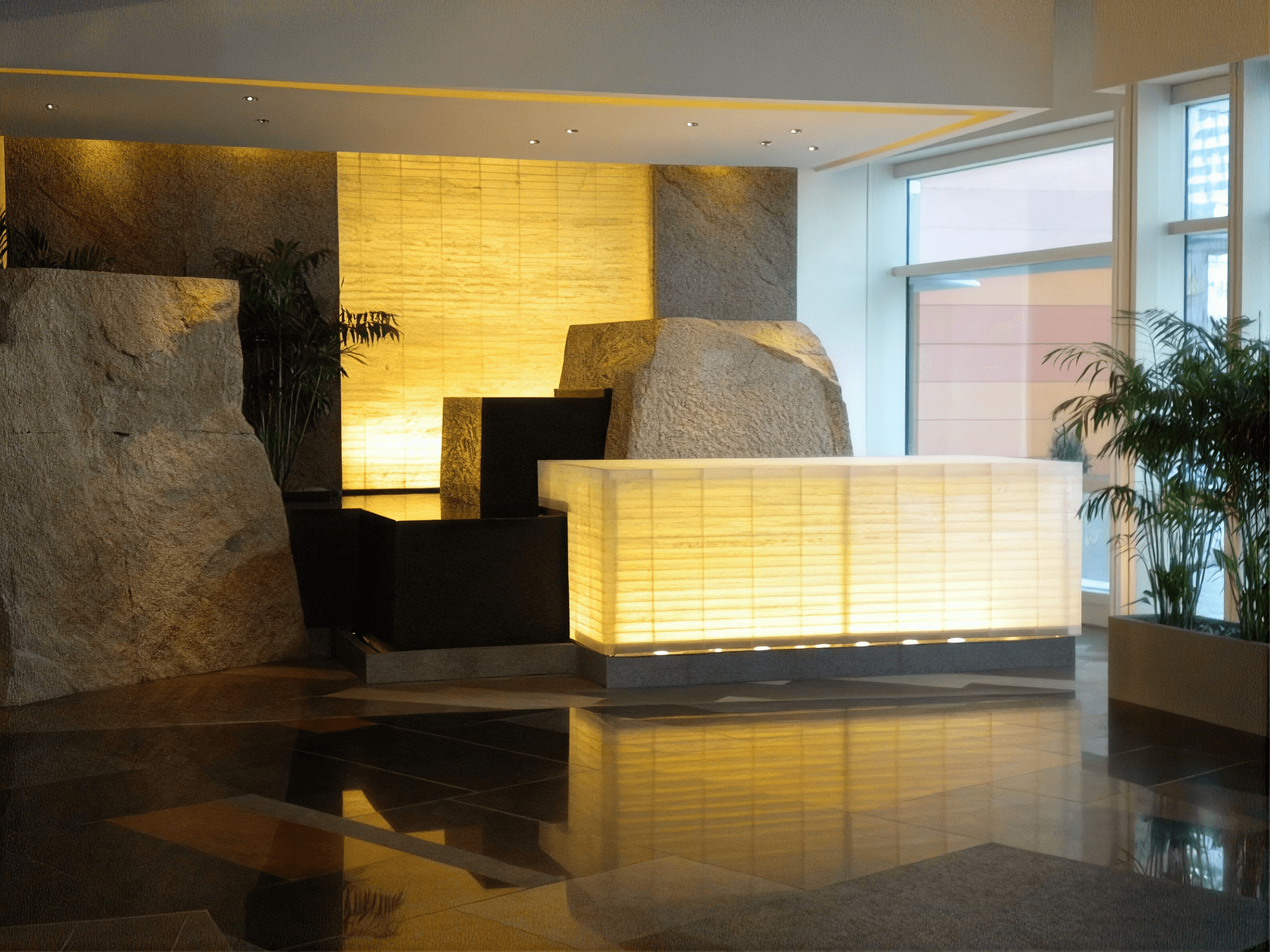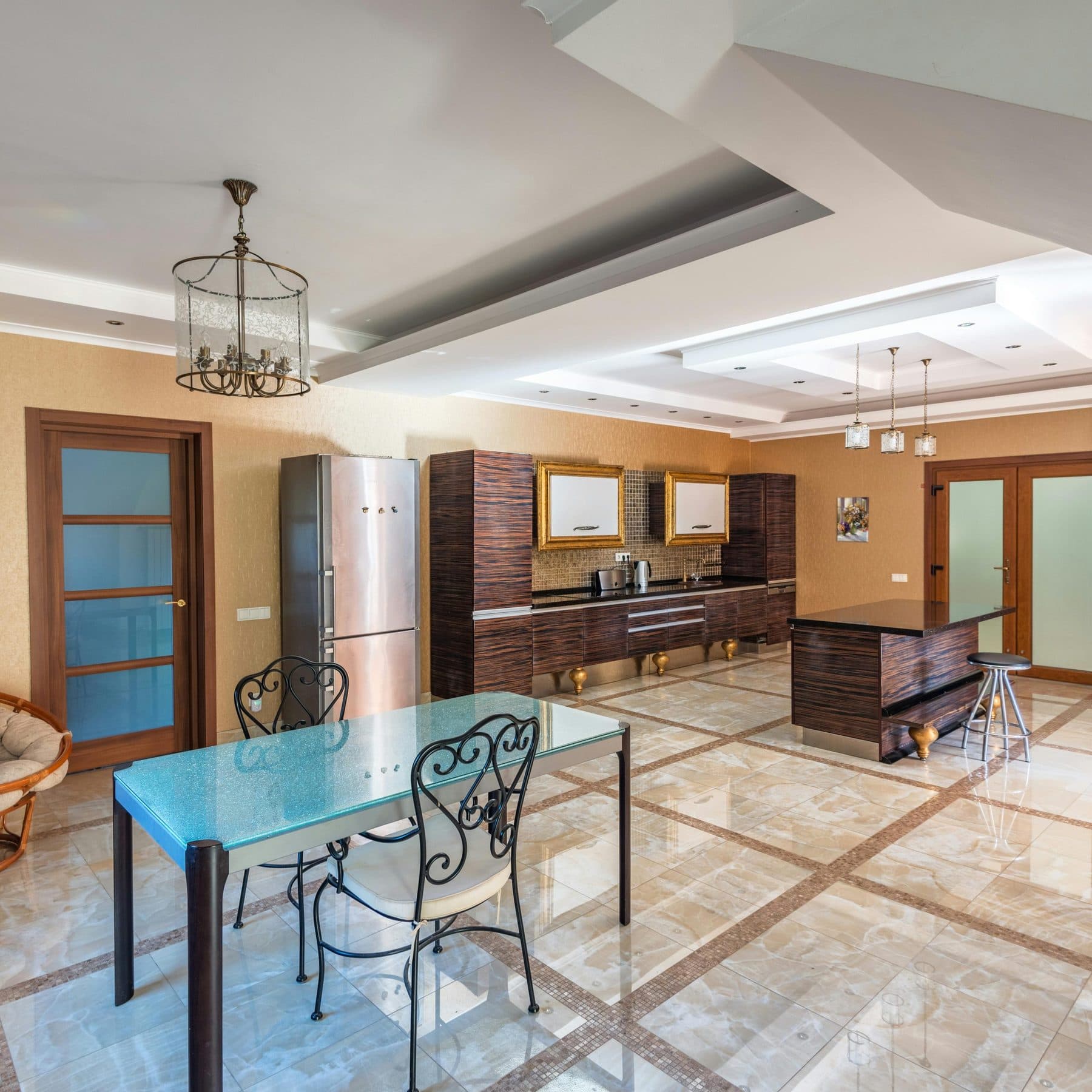
You know which interior piece works best in outdoor spaces? Anything that has a reflective surface on it. The same goes for your countertop. Since the area in question is abundant in light, installing a glass countertop is the best way to go.
Trust us, the surface will never look the same twice. So instead of asking whether glass survives outside, it’s more useful to understand how it behaves in real conditions like heat, rain, or humidity.
Are Glass Countertops Suitable For Outdoors?
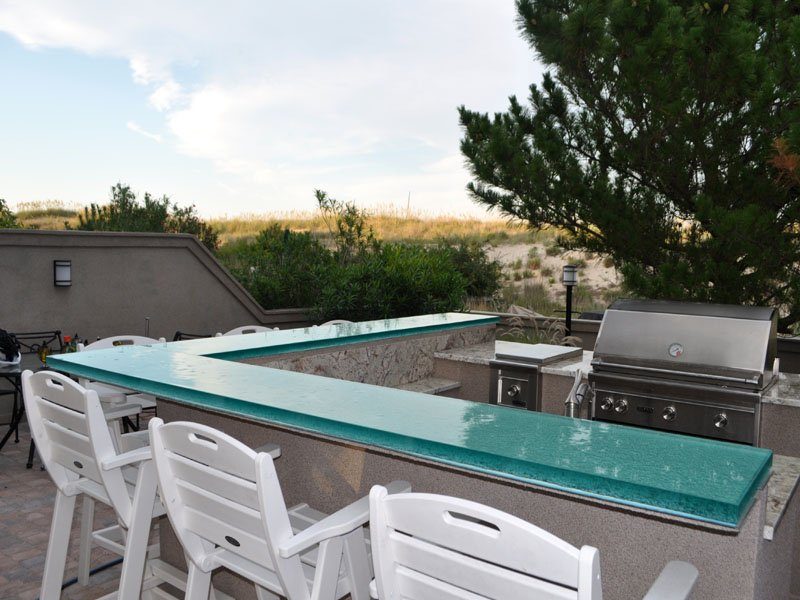
They absolutely can be. In fact, glass has a few natural advantages that make it surprisingly well-suited for outdoor spaces.
First, it doesn’t absorb water or hold onto stains the way wood or some stones do.
Second, it’s more stable. Properly made tempered glass is designed to handle daily use and environmental exposure without breaking down. You will be surprised at their strength as long as the weight is evenly distributed. So, don’t hesitate to choose glass countertops for outdoor spaces like covered patios, outdoor kitchens, rooftop lounges, etc.
Heat Tolerance
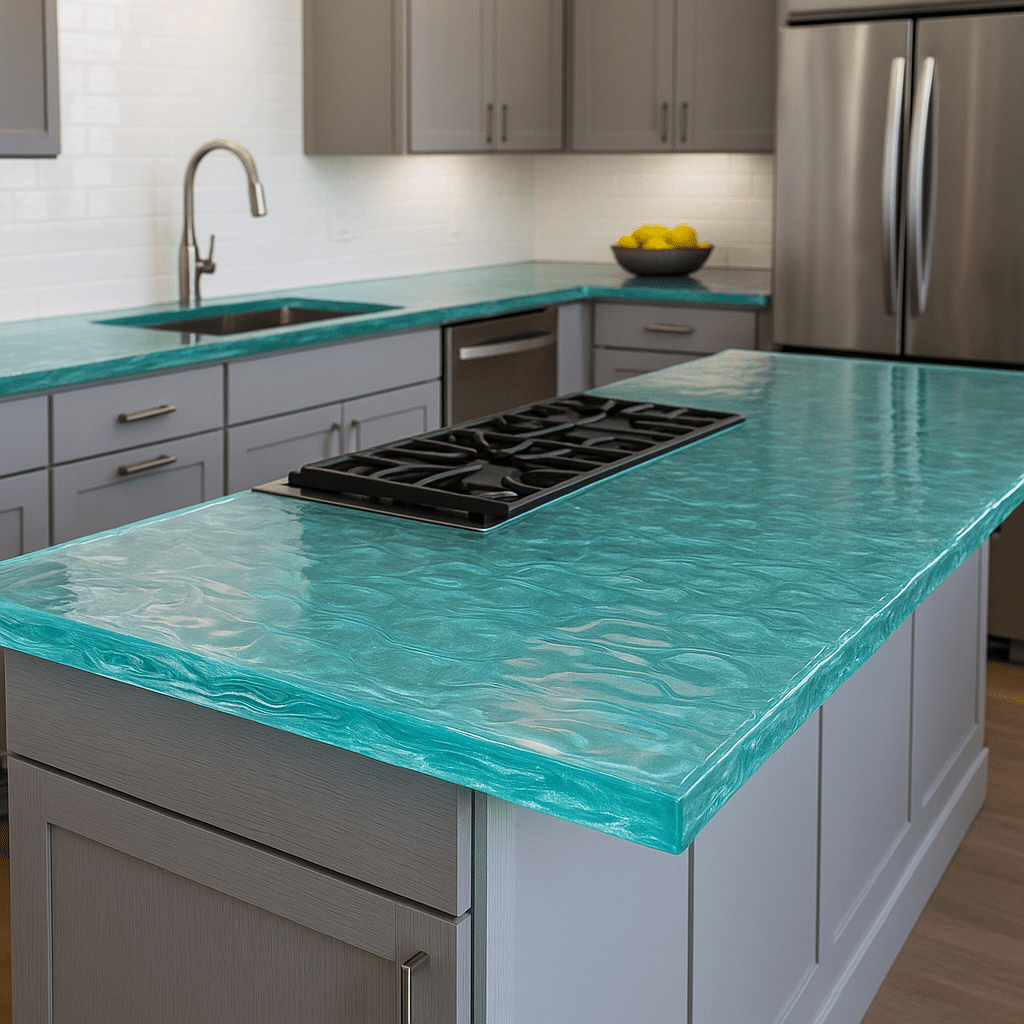
Heat resistance is the most important aspect of any outdoor furniture. Luckily, glass and heat actually get along quite well.
Tempered glass can typically easily handle around 200°C to 250°C (392°F to 482°F) without failing. Some high-quality tempered panels can tolerate even higher short-term exposure.
Now compare that to real outdoor conditions. Even in very hot climates, direct sunlight usually heats surfaces to about 50°C to 70°C (122°F to 158°F).
That’s still way below what tempered glass is designed to handle. So purely from a temperature standpoint, glass isn’t struggling outdoors. Not even close.
Rain & Moisture Absorption
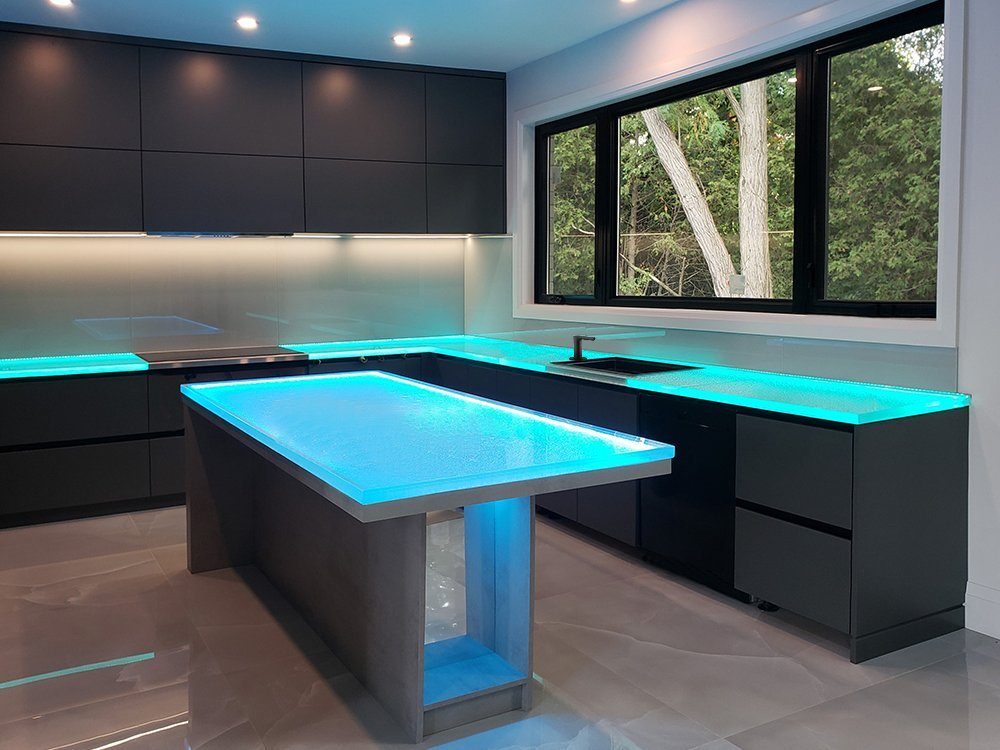
Rain is where glass feels almost effortless. Because it doesn’t absorb moisture, the surface itself stays completely unaffected. No swelling, and no stain from repeated exposure to water.
After rainfall, what you’ll typically see is a fresh, rinsed surface. Dust washes away. The countertop often looks cleaner than before.
Of course, like any smooth surface, water can leave behind light marks depending on the environment. But the upside is how easy it is to bring it back. Just give it a quick wipe.
Salty Air
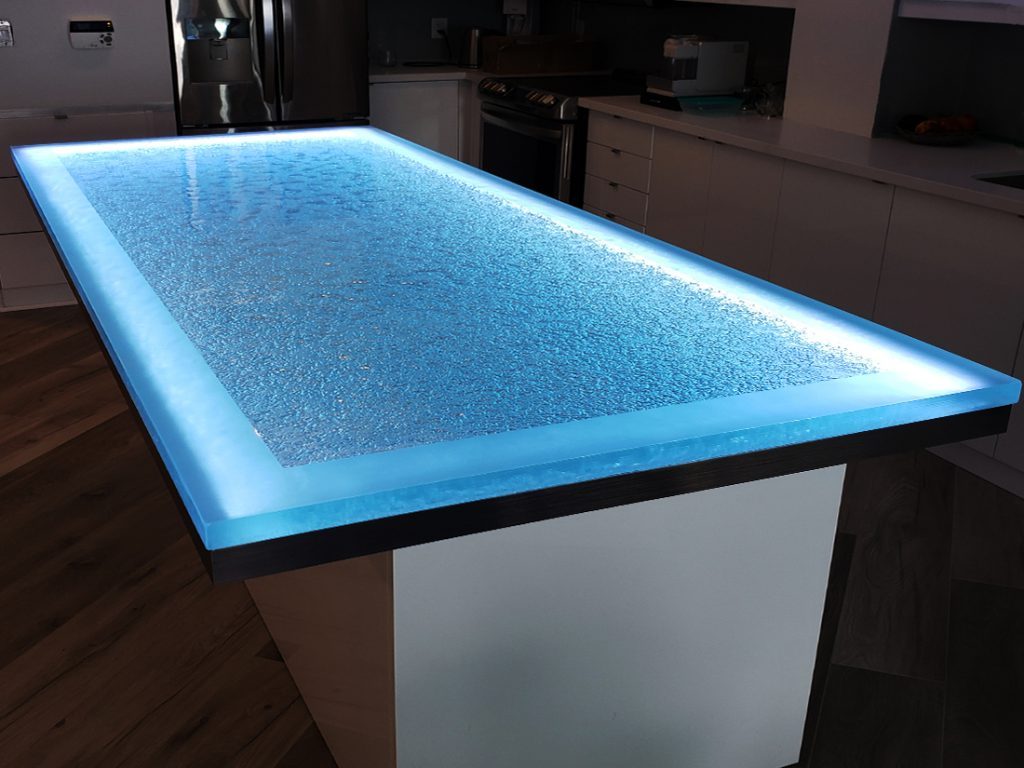
Glass doesn’t react chemically with salt. So don’t worry about the surface changing its color. At best, you might notice a soft layer that builds up over time. That’s pretty common for most outdoor materials near the coast.
The good news is that glass is very easy to maintain in these settings. A simple cleaning routine keeps it looking clear and bright.
And when paired with quality hardware like stainless steel or coated fixtures the entire setup is more long-lasting.
Long-Term Use: What To Actually Expect
Glass ages in a very subtle way. It doesn’t fade or change color or warp. It can keep its structure year after year. And honestly, that’s part of the appeal. Just don’t forget to take care of your glass countertop from time to time through occasional cleaning, and checking seals, etc.
Bottom Line
If you’re creating an outdoor space that’s meant to feel open, refined, and visually striking, glass fits right in. They bring a clean, modern feel that’s hard to replicate. They interact beautifully with natural light. Glass countertops can be installed with waterproof LED or RGB light to illuminate them at night time. And they hold up well when installed and maintained properly.