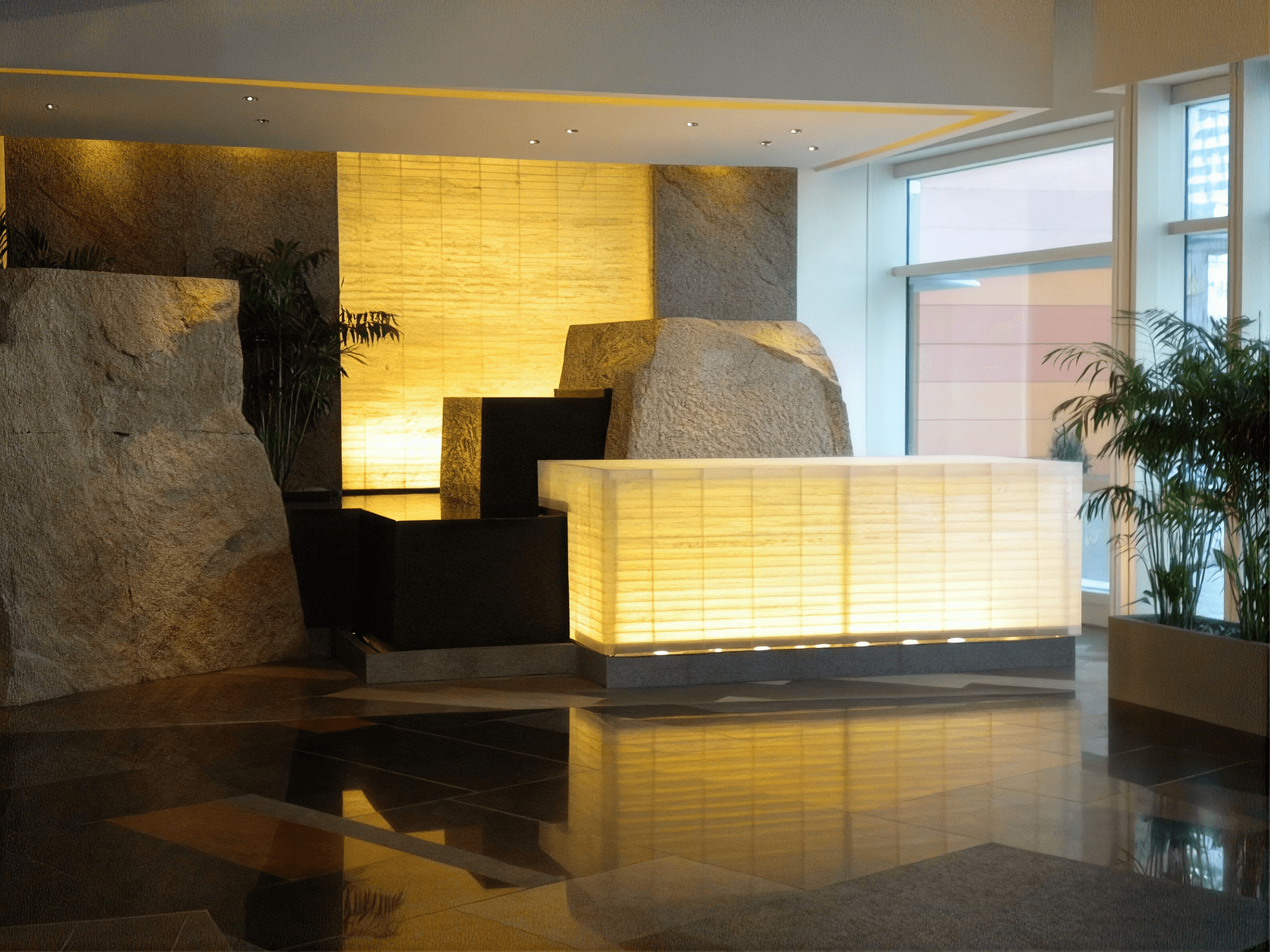
Today the global glass countertop market is estimated to be around $131.42B. With a projected annual growth of 4.8%, the market size could be as big as $185B by 2032. That explains the popularity of glass countertops. But it wasn’t always the case. In fact, for the longest time after glass had been invented, it was not accessible to the masses.
Then, how did we reach today’s time with glass countertops dominating the home décor industry?
Well, stay with us till the end to find out.
The Dawn Of Man-Made Glass- How It All Started
The history of glass is much more ancient than we realize. In fact, Archaeologists agree that the oldest form of man-made glass was produced in northern Mesopotamia around 3400 BC. According to a popular theory, men discovered glass through accident rather than experiment.
It suggests that a group of Phoenician merchants left their cooking pots on a sandy beach. And, when they returned, an unknown translucent object awaited them. Now, we know it as glass.
In the bronze age, glass was not as translucent or shiny as it is today. It was primarily a decorative element used by Pharaos or kings. Glass continued being a fancy object even during the time Romans learned the art of glass-making.
| Year/ Era | Glass-Making Technique | Popular Use Of Glass |
|---|---|---|
| 3400 BC | by mixing soda, lime, and sand | On jewelry, and pottery |
| 1500 BC | basic lampworking | On bead-like jewelry again meant for the Pharaos or aristocrats |
| 50 BC | Glass-blowing using a blowing pipe | To make decorative blown vases and other fine pottery |
| 1688 | Casting technique to mold complex shapes | Large glass sheets in industries |
| 1874 | Quenching & Cooling | Tempered glass |
| 20th Century | Automated press and blow | In commercial-space interior, fine dining, etc. |
| 21st Century | Fully Machine-Based | On home appliances, interior, fine dining, automobile, buildings, etc |
It was only after glass-blowing techniques were invented by Venetian craftsmen that glass entered its commercial era. During the Renaissance era, glass was a major element in the architecture of churches, and cathedrals in France. However, it was still not considered a safe or strong material by the masses.
Then came the invention of tempered glasses through quenching and cooling techniques. To be fair, it changed the whole trajectory of how glass is viewed as a home décor material. Tempered glass is durable and even if it breaks, it is harmless.
Backed by the use of modern technologies of the 20th and 21st centuries (sandblasting, carving, and slumping), glass is now one of the most sought-after materials for home décor.
The Evolution Of Glass Countertops- From Art To Daily Use
Even though industries started mass-producing glass in the early 20th century, its application in making countertops didn’t happen until the latter half of that century. However, we still consider the entire 20th century to be a significant period in the history of glass countertops.
The modernist design movement that occurred in the 60s opened the door for what we call “minimalist aesthetics.” Since then, glass has started being a valuable material for countertop design due to its sleek and stylish appearance.
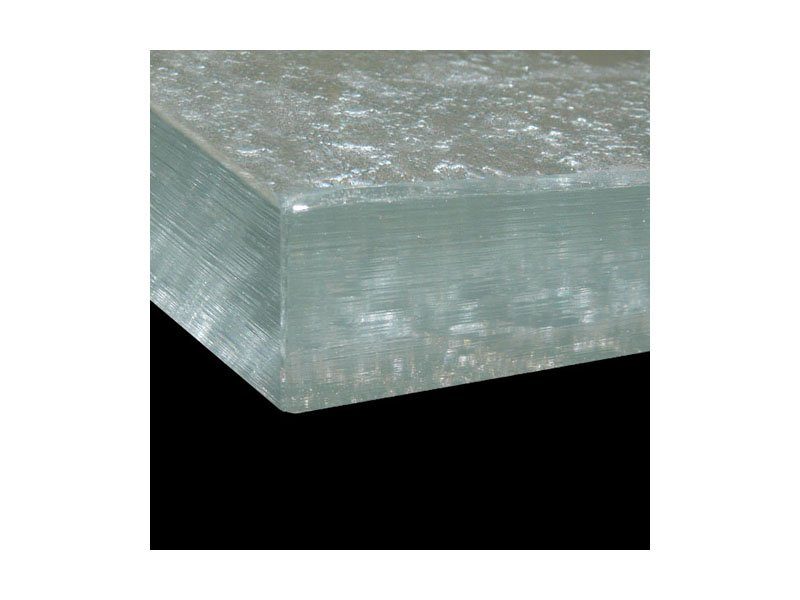
The 70s and 80s saw a boom in commercial-grade glass countertops meant for restaurants and bars. But it was still behind wood and granite as a countertop material.
| Year | Highlight |
|---|---|
| Early 20th Century To 1960s | Pop art movement opening doors for today’s minimalist aesthetics |
| 1970s-1980s | a niche luxury product used for architectural purposes. |
| 1990s | Mass production of durable tempered and laminated glass |
| 2000s | Renowned brands started promoting glass as a sustainable countertop material |
| 2010s | Introduction to backlighting, various glass textures, and back-painting features. |
| Present Day | Strong, durable, and aesthetic, and up for any type of customization. |
It took another decade of modernization and advancement of glass-making technologies that finally force everyone to consider glass countertops more seriously. From 2the 000s and onwards, major home décor brands started adding glass countertops to their portfolio to meet its rising demand in common households.
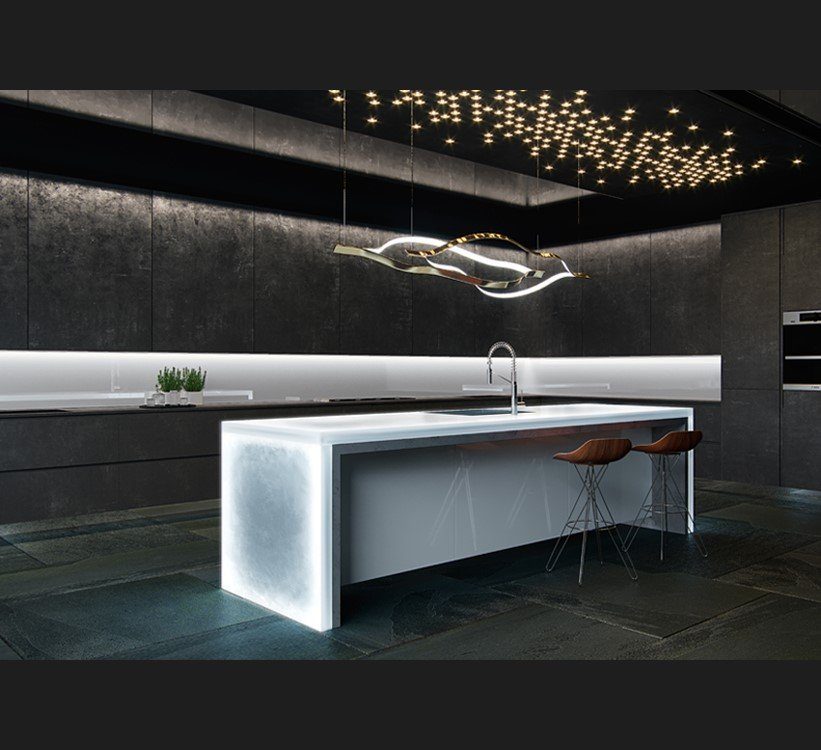
More and more customizable features led us to LED backlighting, textured surface, various edge finishing as well as color options. And, today, glass countertops are accessible to the mass with strength and aesthetics that is just too hard to match for any other material.
Comparing Quality Of Glass Countertops From Different Decades
The evolution of glass quality used in making countertops is truly remarkable. Here’s a brief year-by-year comparison of how the characteristics of glass in countertops varied.
1970s-1980s: Fragile Beginning
Despite the basic technology to produce glass countertops being present during the 70s, it was still not accessible to average people due to its high cost. Also, the standard glass used to make countertops was not heat-treated.
So, they were quite fragile and prone to breaking. No doubt, only the aristocrats would order customized glass countertops as a decorative interior piece for their residents. They were not meant for practical daily use.
1990s-2000s: Daily-Use Friendly
Glass-tempering techniques pushed the strength and durability glass countertops lacked earlier. High-end brands started including thick (up to 3 inches) glass countertops in their portfolio. For the first time in history glass countertops were accessible to the masses. Even though the quality improved a lot and was apt for practical use, it was still a luxury product.
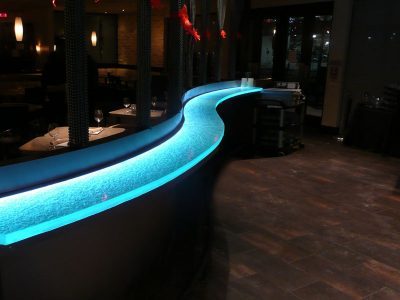
2010s: Sustainable & Customizable
As the laminating and tempering techniques got better, they started appealing more to the eco-conscious section of society. As glass is recyclable and more sustainable in the long term, conscious homeowners wanted to get glass countertops.
As a result, in 2the 010s we saw a boom in accessories that complement these countertops. The multi-color backlighting and back-painting trend started in this decade. Not only can you use a glass countertop daily but also make it look aesthetic.
Modern Day: Stronger Than Ever
Currently, glass countertops are competing with wood, granite, and marble in terms of longevity. Additionally, the wave of minimalism has really propelled the growth of glass countertops in the global market. Glass naturally is transparent, slee,k, and just extremely eye-soothing.
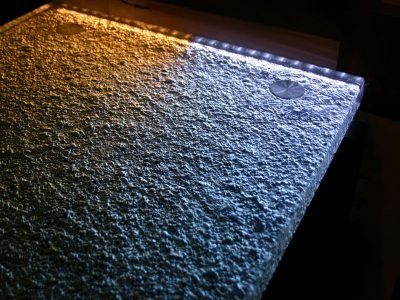
Plus, today you can go to an interior store like CBD Glass Studios and customize every aspect of your countertop. From RGB/LED backlighting, to clear and textured edge finishing, multi-color as well as plain surface treatment. Whatever aesthetics you want to embed in your home, can be delivered thanks to their high-end glass bending, UV bonding as well as digital printing technology.
Before You Leave!
It’s shocking how much difference a decade can make. From being seen as a fragile luxury element to being used in everyday kitchen countertops. Glass has come a long way in terms of evolution. Want to be more surprised? Take a look at the mind-blowing glass countertops collection by CBD Glass Studios.