
Glass goes beyond just a decorative piece. They may seem fragile, but as a countertop option, they serve better than other materials. Especially when it comes to stain resistance.
Glass countertops provide the perfect balance between practicality and visual magnificence. Nevertheless, let’s discover how they stack up against the daily threat of stain.
Glass As A Countertop
Glass countertops bring a modern look to contemporary homes. They also offer practical benefits. The surfaces are pore-free. This very quality allows glass to withstand stains as well as prevent bacterial growth. When wine or coffee spills, you can clean it with a simple wipe. And no marks stay behind.
Having said that, heat doesn't damage glass countertops. Thanks to the tempered glass made panels. They don’t crack even when hot cookware is placed on them.
Besides, many glass countertops are forged from recycled materials. Some of which possess 85% recycled glass. Broken glass pieces are organized to create these countertops. The pieces are held together by melting or resin.
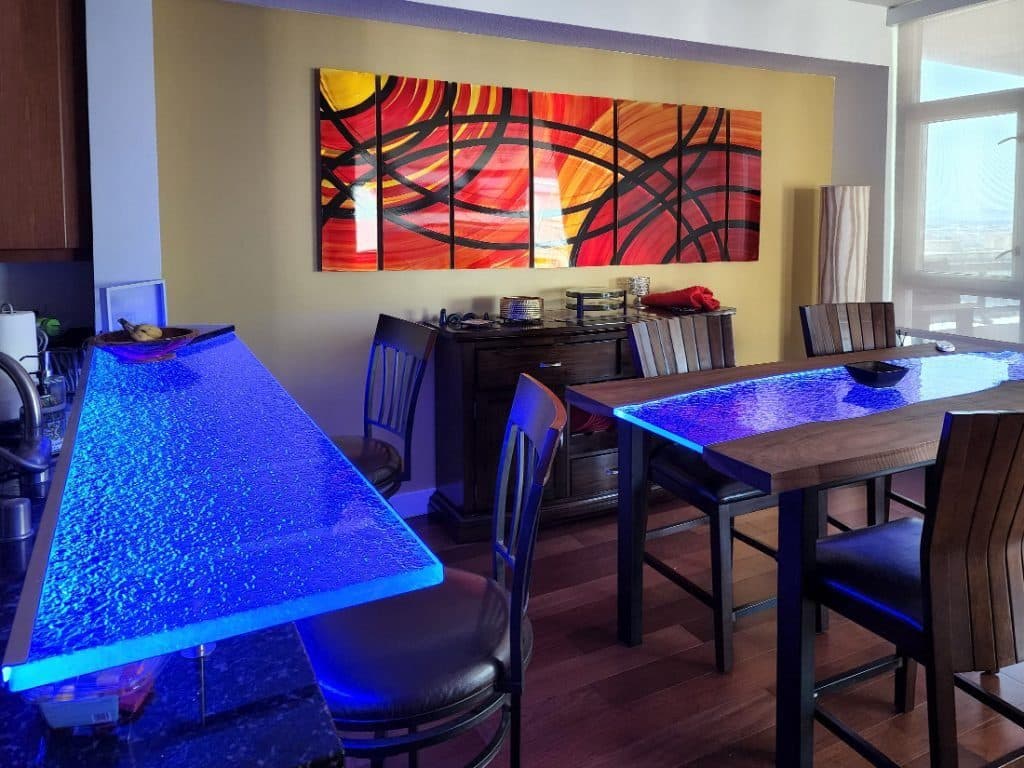
That said, glass countertops allow you to customize a space to the highest degree. Be it a kitchen or bathroom. A luxury statement piece or a functional countertop, glass works either way.
You can choose from many textures. The colors vary widely. Different patterns are available, too. This adds to how much you can customize.
Are Glass Countertops Stain-Resistant?
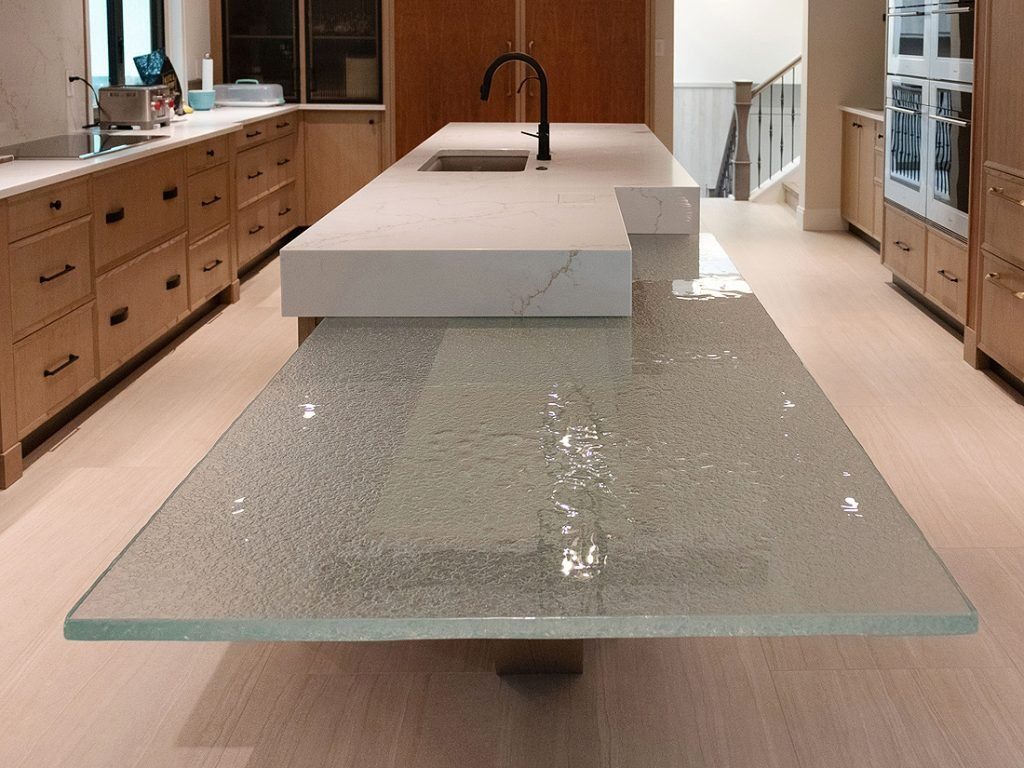
Glass countertops resist stains extremely well. The U.S. Pacific Northwest National Lab (PNNL) found that, glass panel soaks almost no water. Less than 0.1% by weight, in fact. So spilling coffee, wine, or oils won’t ruin the panel in the long run.
Building scientists observed that glass lacks internal surface area. Plastic and steel have this quality. Consequently, moisture can not get trapped inside without internal space. Or should I say pores?

Speaking of pores, glass’s structure explains a lot. It is smooth and possesses a fused composition. Under the hood, glass has a strong silicon-oxygen bond. This makes it a stable material. Kitchen acids won't damage these bonds. Bathroom cleaning products can't break them down either. Hence, glass countertops remain stain and damage-free after years of usage. [Building Science]
More importantly, glass countertops go through special treatments. This makes them tougher. Manufacturers polish them to create the glazed finish. That is why they require no extra sealing ever.
Glass Countertop Care and Maintenance

Daily care
After every use, take a soft cloth. Soak it in warm water. You can mix dish soap if needed. Then wipe the surface thoroughly. That’s it. No more fingerprints or food residue on the surface.
Deep clean
Perform a countertop heavy-duty clean once every month. Mix soda with water to create a paste. Apply it all over the surface. Let it rest for 10 minutes. Then wipe with a damp cloth to remove stubborn, sticky oil marks.
Precautions
- Do not use rough scrubbers. They will scratch the glass.
- Avoid bleach and vinegar for cleaning. Pick up a cleaner without ammonia.
- Use cutting boards to avoid accidental scratches on the surface by sharp objects.
- Use a kitchen mat between the hot dish and the glass. This retains the longevity of the countertop.
Summary
The surface of glass is not porous. This helps them stay hygienic. They are durable as well. Glass is a blessing for homeowners who seek functionality, easy maintenance, and aesthetically superior countertops.