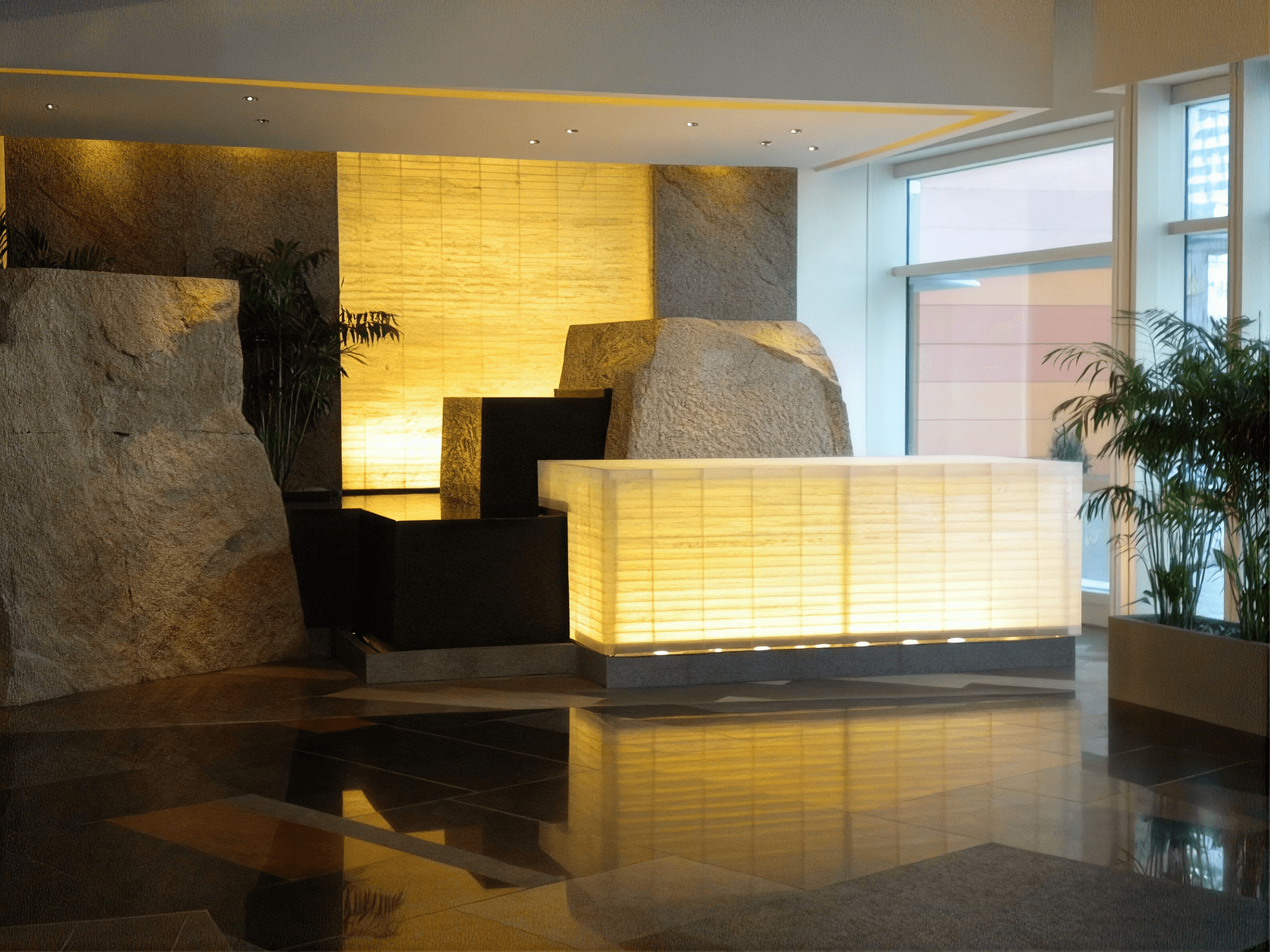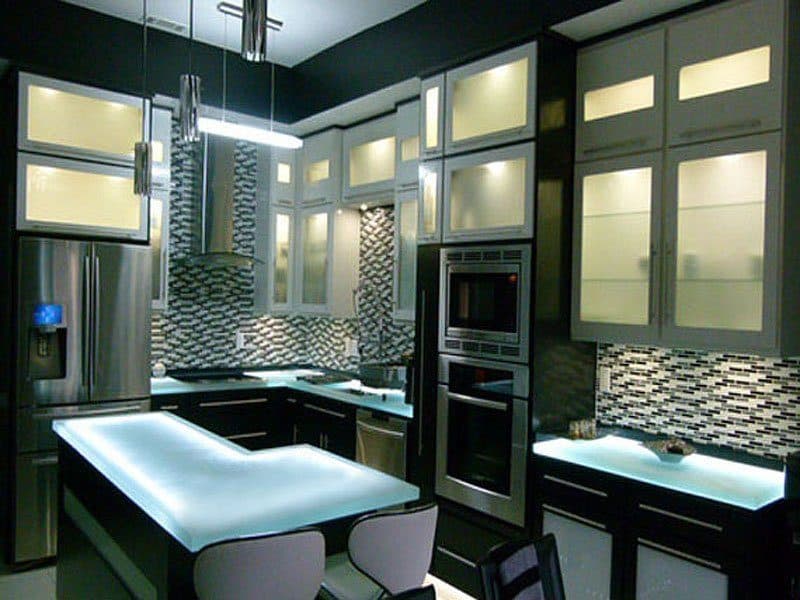
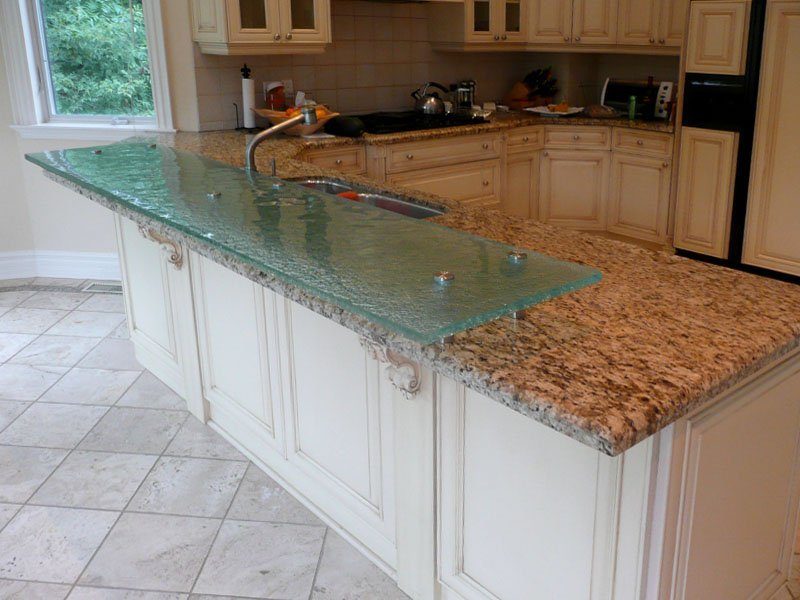
Glass and Granite’s composition sets them apart in different qualities. Hardness is a fundamental one. Based on this, the implementation of these materials in real life varies. While granite is forged in the Earth’s blazing core, glass is made from a sand mixture.
Material Hardness Explained
For any material, hardness refers to its property of resisting lasting damage. It can be bending, shattering, scratching, or other sorts. This kind of change is widely known as plastic deformation.
Now, materials that can endure outside forces to withstand these changes are labelled hard. But to a certain degree. Every material has a point where it can not retain its atomic integrity.
And how is that determined? Well, this is where material hardness tests swoop in. With rigorous examination, hardness is defined for glass, granite, metals, etc.
The Mohs hardness test is a widely used test. A German scientist named Friedrich Mohs created it. This happened in the 1800s. He was a geologist. Its working principle is straightforward. Harder material scratches a softer one.
Just so you know, Mohs employed a scale of 1 to 10 to determine the hardness level. Anything has a score of 1 is the most scratchable substance in the world. Whereas, 10 means it can scratch any other minerals. Such as diamond.
Glass vs Granite: Hardness Comparison
Hardness Of Glass
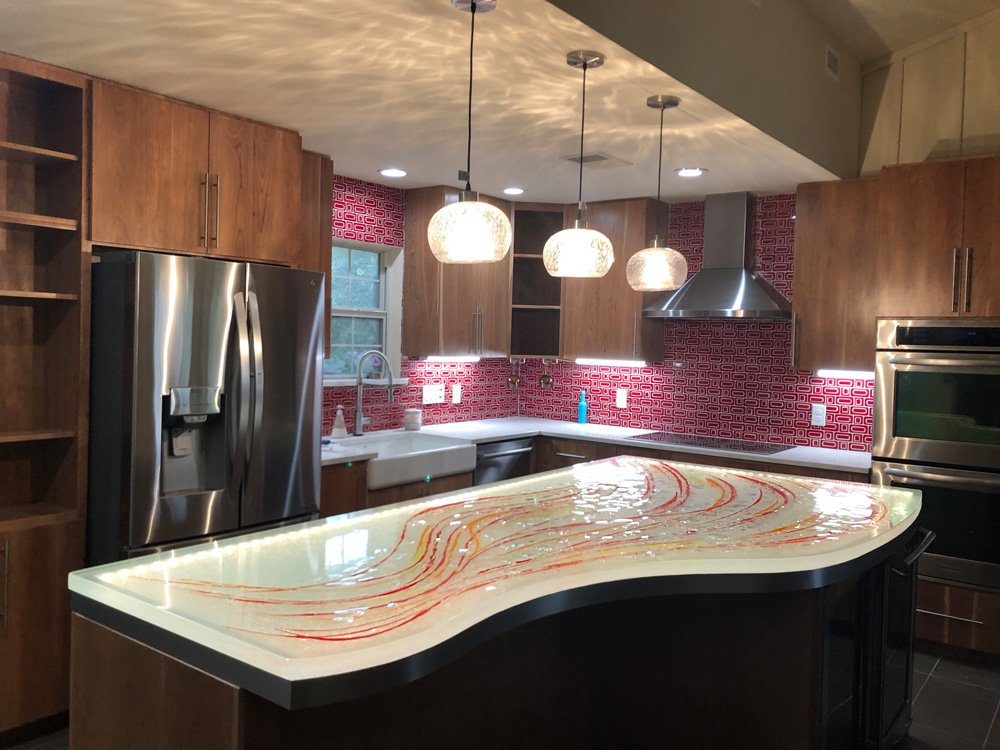
The hardness level is not constant for glass. It’s due to the variation in the composition of different glasses. There are borosilicate, tempered, laminated glasses, and glass-ceramics for home appliances.
Standard glass exhibits a Mohs hardness ranging from 5.5 to 6. This is its standard rating. It represents a good hardness level compared to other materials. Tempered glass, however, has a rating of 7-9 on the same scale. These types of glasses are used in high-traffic areas like kitchen or bathroom countertops. Also, in cookware like oven doors.
The Vickers testing method for glass is widely used as well. This test checks how materials change shape. It measures plastic deformation. Soda lime glass scores 5.0- 5.5 GPa, borosilicate 5.44- 6.30 GPa, and tempered glass 6 - 7 GPa. [ResearchGate]
That said, glass being glass, is still brittle. It will break under high tensile stress and sharp impacts. Even though it has high scratch and deformation resistance.
Hardness Of Granite
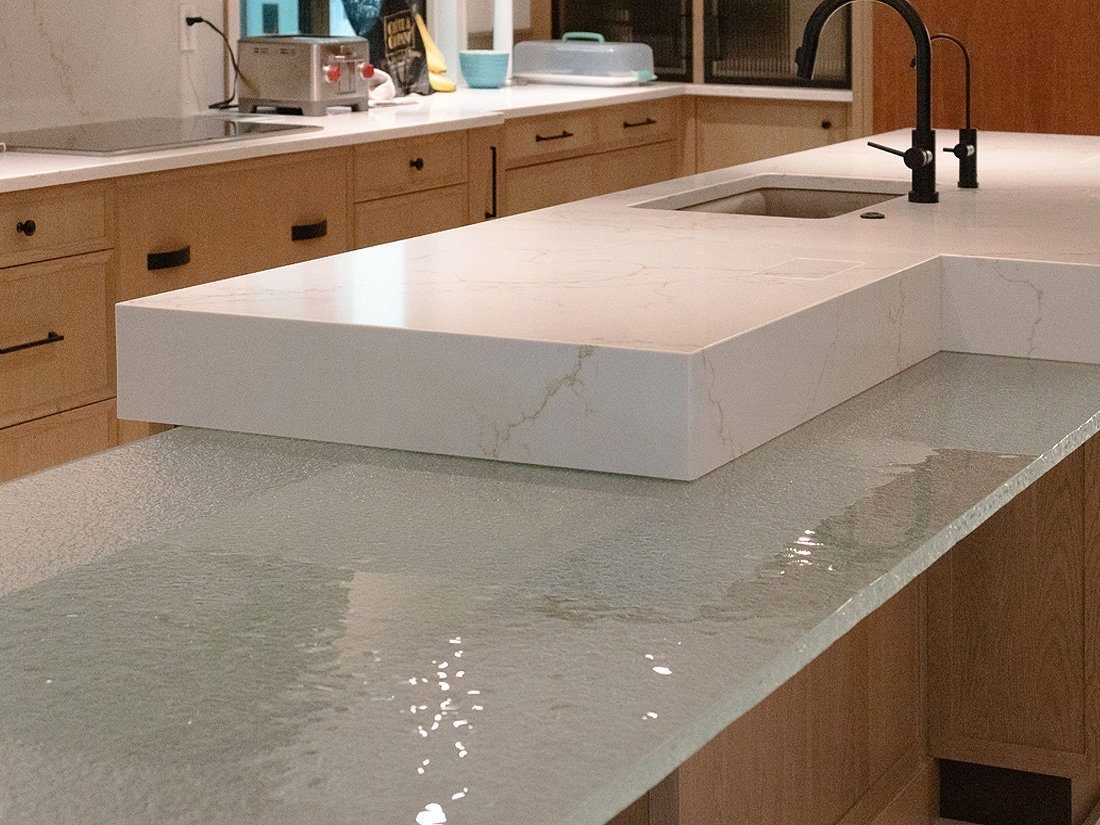
Granite reigns in construction and design. Simply because of its exceptional hardness and durability. On Mohs scale, it finds its place in the middle of 6 and 7. Therefore, it stands firm against scratching and abrasion.
Under the hood, quartz and feldspar compose granite. This contributes to an impressive hardness. Both of these materials create a complicated, dense, and interlocking crystal structure.
Here’s a detailed look at the glass and granite hardness:
| Features | Glass | Granite |
| Mohs hardness | 5.5 - 6.5, tempered glass can go as high as 9 | 6-7 |
| Rockwell hardness | Not measured | 51.3 - 58.5 HR |
| Composition | Amorphous silica | Quartz, feldspar, mica |
| Scratch resistance | Moderate | High |
| Impact resistance | Brittle, Tempered glass can withstand a heavy object drop | Tough yet cracks under heavy impact |
| Heat Resistance | High | Excellent |
| Porosity | Non-porous | Porous |
| Maintenance | Low cost | High cost |
| Cost | Normal glass costs less than granite, but specially treated glass costs go way higher | Higher than typical glass. |
| Applications | Windows, countertops, Crockery, decorative items | Countertops, flooring, and building facades |
Choose the Right Material
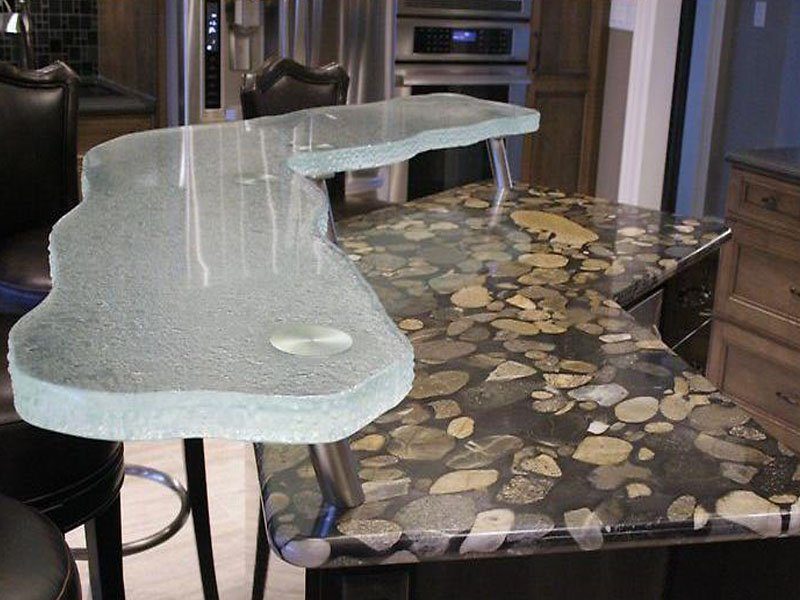
Being caught between granite and glass is overwhelming. Both have their own pros and cons. And it shows in the real-world application.
Many homes contain glass and granite. These materials serve many purposes. They work well in residential settings. While granite is mostly found in table tops, flooring, and wall cladding, glass dominates bathroom and kitchen areas.
Although granite is harder than regular glass, tempered or recycled glass is used heavily in kitchen and bathroom applications. So that edge on hardness granite slims off for granite.
Moreover, hardness alone does not define a better material. Glass’s non-porous nature puts it ahead of granite. Especially as a kitchen countertop. Unlike granite, bacteria can not build up on glass panels.
Also, tempered glass countertops at CBD Glass are rated for 24,000 psi strength. So they fit perfectly in high-traffic areas like kitchens.
When all is said and done, it’s wise to choose granite for high-abrasion areas like walls, floors, and road paving. Glass, on the other hand, does an amazing job as a durable surface. Appropriate as a premium application in doors, interior walls, decorative tiles, etc., due to supreme aesthetics.